

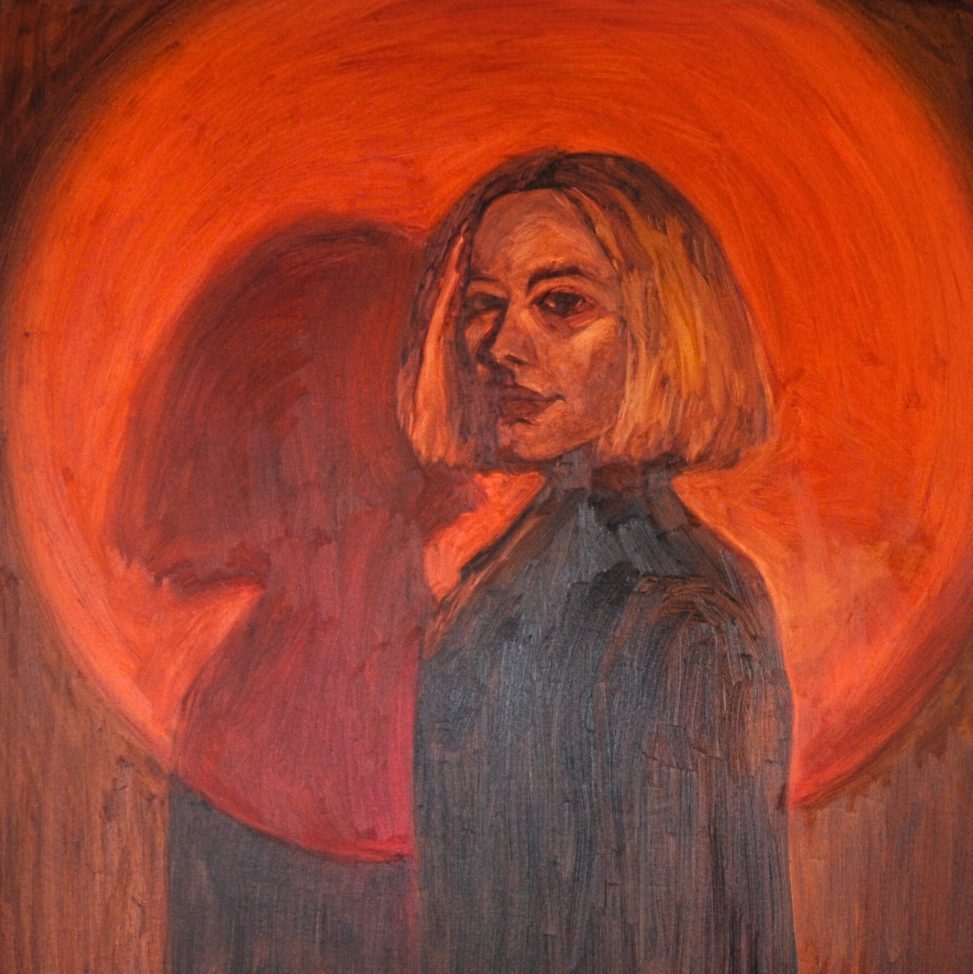
There are days when everything seems perfect. Normal. I think that’s how others perceive us—as a healthy, wonderful family. When I go to places where they know my parents, I have to manage people’s joy, bordering on excitement. I’m interrogated: “How are things with you?” and “What is your father doing now?” I manage somehow, answering in fragments. If they knew all sides of this coin, they probably wouldn’t believe it anyway. It would be enough for them to just ask the neighbors. But now, these are the good days.
If I were truly honest, I fear the good days more than the bad ones. When a day is bad, you don’t forget to put on your armor. You expect a blow, and when it falls, you can withstand it. You remember the discipline. Good days lull your vigilance. They undermine such a meticulously woven sense of reality. Yet, even on good days, blows still fall. You feel exposed and unready for battle. That’s why good days can be treacherous. On good days, one also tends to open up. To be truthful. And truth is an expensive commodity. Unfortunately, it’s non-renewable. Much like trust. That is why what triggers my greatest vigilance now is a good day.
Today is a good day. Sunday, on top of that, and the end of the school year is approaching. I feel a gentle loosening. I’ll finally be able to enjoy the sun. I eat breakfast in silence. I watch young, clumsy wood pigeons on the birches outside the window. The Father bursts into the kitchen. “Hey, what’s up? … blah blah blah…” The logorrhea begins.
The problem with a good mood is that when The Father is in a good mood, everyone around him must be in a good mood. Neutrality or passive existence is treated as a bad mood that must be fought—preferably with talk. Imposing will. Drowning everything in his “positive vibrations.” Another year of this and I might actually become gloomy.
I mutter something back, half-heartedly, so as not to offend the majesty but to keep my inner peace. Mental balance training in Tibet? Come to my place instead.
Dad suggested we go to Kazimierz Dolny. As is typical for a good day, the unexpected was to be expected—Grandma is coming too. This was like a sudden jump in stock market prices—it had never happened before. They encourage me to join; I hesitate. I don’t see it, but on the other hand, I did nearly sixty kilometers on my bike yesterday; I’d gladly take a rest. And Kazimierz, unfortunately, is my weakness.
Traveling by car with family is a major challenge. Today, luckily, Grandma was the center of attention, so I could drift away in my thoughts and soak in the world passing by—exactly how I like it. A few basic questions were asked: about school, about life, suggestions of getting a boyfriend. I dodged them all gracefully; after all, I’ve been doing this for years. These questions, when they come, feel like being scalded with boiling water. I don’t even know why. Perhaps I hear that false smile they put on their faces. Stripping someone of their dignity doesn’t have to be loud and brutal. A quiet question, void of empathy and discretion, is enough. Halfway there, the question loomed: “Why did I agree to this?”
I grit my teeth and look at the landscapes. Now that we’ve passed Nałęczów, it’s become truly beautiful. I try to focus on the views and not stir up hatred toward them. I just want them to leave me alone. Just once, for a change. I feel that Mom is slowly getting fed up with Grandma too. I can predict that for the next few days, she’ll be quietly badmouthing her at home, supposedly building OUR relationship. Don’t know if it works that way, Mom.
We arrive. It’s not noon yet, but the sun is starting to warm up. Between the townhouses, the heat isn’t felt yet. We walk slowly toward the Vistula. Walking in the fresh air allows me to distance myself slightly from the group. We are “together, but separate.” They sightsee, and I wander behind them. Normally this would be tiring, but today my aching legs really appreciate this “grandma-style” walk.
I think about Grandma. Grandma would actually be quite alright if it weren’t for those moments when she has a deep need to stick a needle in someone. Her needles can be very deceptive, soft as wool. Sometimes it takes a few days before you start to understand everything. Usually, I’m not the target, but my mother is —the daughter-in-law. Perhaps that’s where her habit of talking behind Grandma’s back came from. I don’t know what it stems from, but clearly, both of them have holes in their self-esteem. Grandma sticks a needle in Mom, then Mom has to stick something in me—as it goes in a family. The most interesting part of all this is that despite how much they dislike each other, they shower one another with more politeness in these few hours than my entire six-month supply. Maybe that’s what being an adult is about?
We’ve walked along the Vistula as much as the elders could handle; now it’s time for the town square. There, a suggestion for coffee and ice cream was made. I don’t like coffee, and ice cream doesn’t agree with me. On the other hand, I’m very curious about what the marketplace behind the square looks like. This is where I came with my paintings during summers for the last few years. I’m curious if the market still exists. Taking advantage of the situation, I suggest I walk away. Everyone agrees; after all, we’re in no rush. Almost skipping, I cross the space between the townhouses and hop into the alley leading to the market.
At the site, I experience a minor shock. The marketplace, even though its main component is people, hasn’t changed at all. I see all the familiar faces from my trading days. There’s the man with the cheesy paintings, there are the clever men trading silver (unfortunately, the tax office caught up with them last year, and they were a bit shaky for a while). I don’t bother trying to remember their names—I only remember old Mr. Ludwik of the clocks by name, but I don’t see him. Maybe it’s for the best, because his intentions toward me were very impure. Disliking excessive affection, I blend into the crowd of tourists, hoping no one recognizes me. After all, I only wanted to look, not renew meaningless acquaintances.
I walk through the entire market. At the exit stands a large tent with clothes. While clothes aren’t my weakness, I nonchalantly start browsing the shirts on a rack. A white linen one with English embroidery catches my eye. I like it. I ask for the price. Thirty-five. Expensive, I think, for a market shirt. But I like the shirt. I check my wallet—only two twenties–I wasn’t planning on shopping; in fact, I was surprised I even remembered my wallet. I linger around the stall for a while longer. Ultimately, I give up. I leave the marketplace at a slow pace. After all, I only came here to look.
Leaving the market, I reach into my backpack and pull out my phone. Three missed calls. From The Father. The market was noisy; I clearly didn’t hear it. I wonder what they’ve come up with this time and call back.
Already after the first ring, like in a game show, I know that the day has just turned from good to bad. “I’m sorry, you didn’t pick up,” a few grunts and a reproachful tone in his voice. “We’re already on our way home.” Grandma’s muffled voice comes from the background. I look at my watch—we separated no more than half an hour ago. Essentially, a day like any other. You never know when the light will go out. In my soul, I congratulate myself for giving up on buying the shirt and, holding my saving wallet, I head toward the bus station. The bus to Lublin leaves in half an hour. Perfect. So I sit and wait patiently. On the way home, no one interrupts my silence with senseless babbling.
Bad Good Days, 100×100 cm, Oil on canvas, 2024, destroyed
leaking